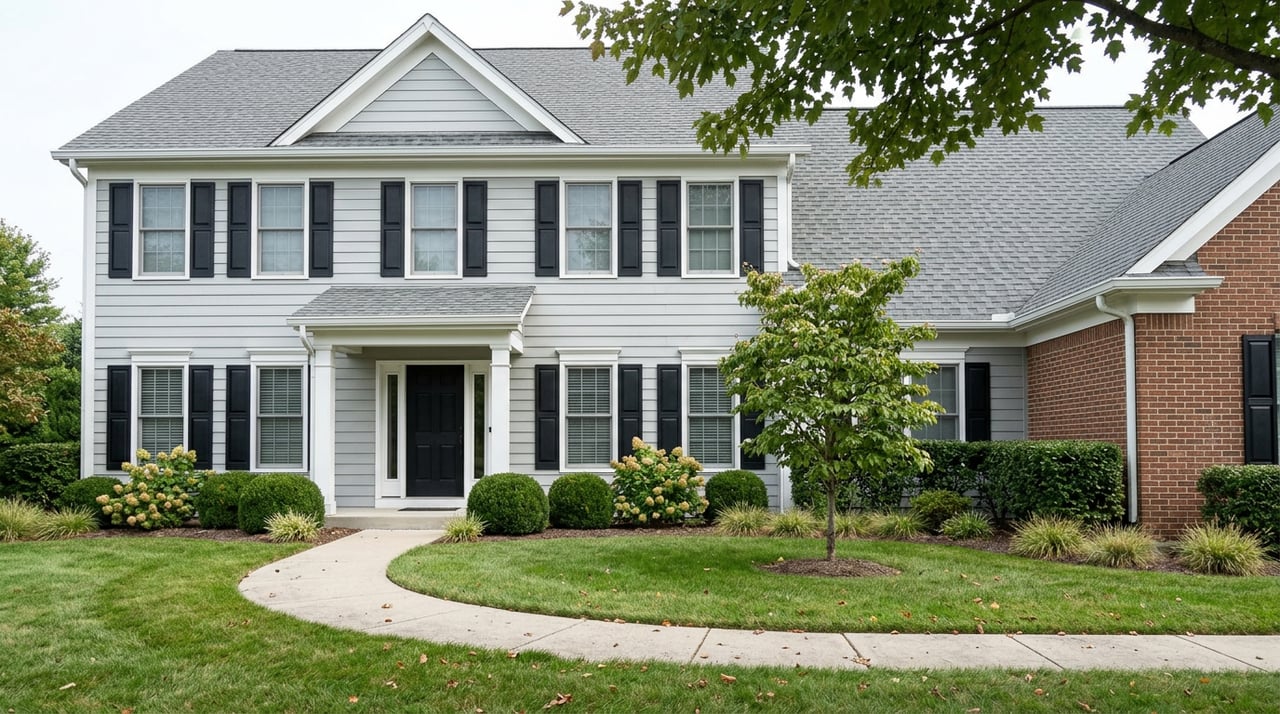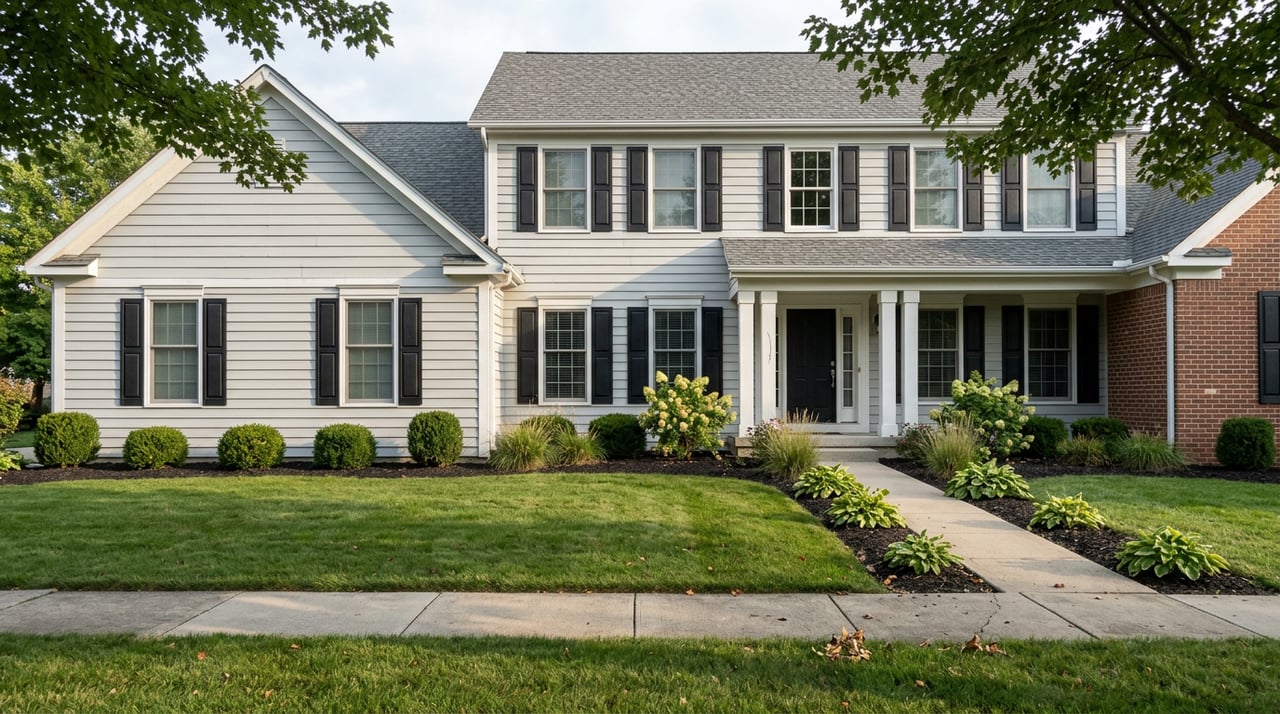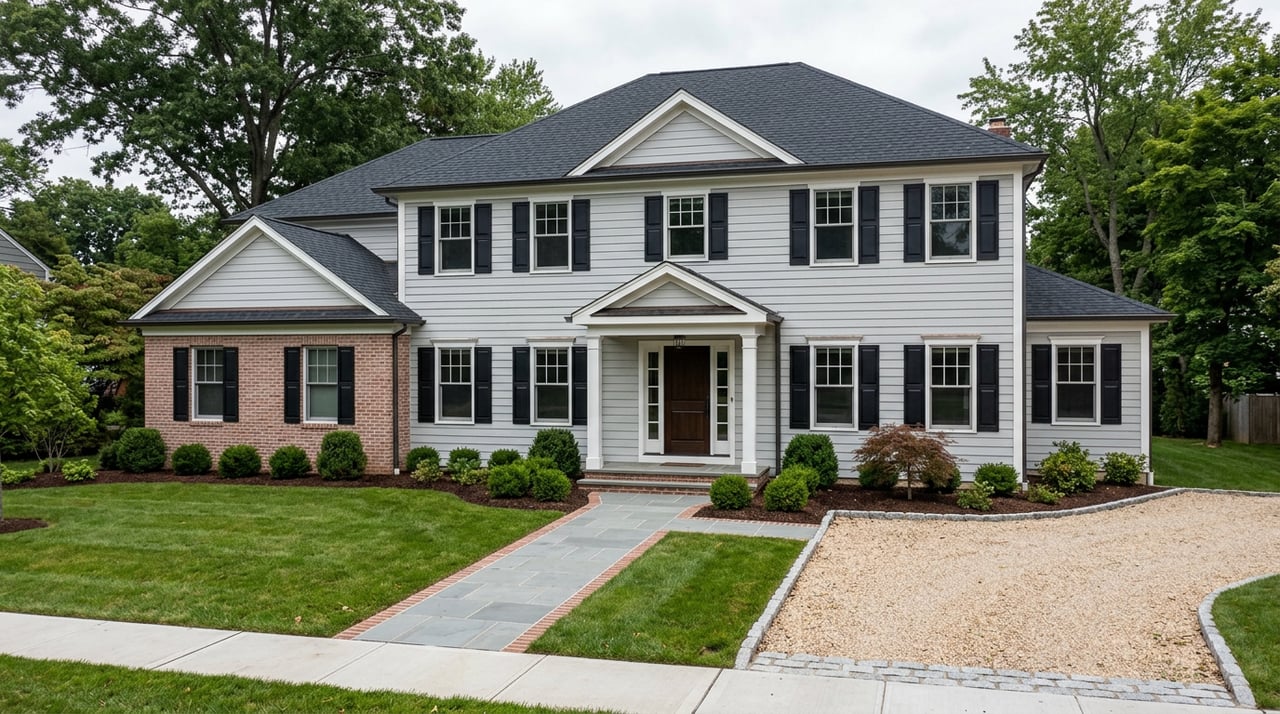
A buyer cross-shopping Southwest Michigan and Granger, Indiana usually starts the same way: two listings, side by side, both hovering around $400,000. The homes look similar. The tax lines on the listing sheets look similar too. They are not telling the same story.
One of those numbers is a ceiling that stays fixed to the home's current value no matter who owns it or how long they've owned it. The other number is about to change the moment the deed transfers, and it rarely changes in the buyer's favor. Most people never learn which is which until they're staring at their first full-year tax bill, wondering why it doesn't match what the seller was paying. Since this team holds licenses on both sides of the state line, that gap is one of the more common questions that comes up before a Granger or Michiana buyer ever writes an offer.
The Cap Everyone Assumes Works the Same Way
Indiana's property tax system runs on a constitutional cap. Article 10, Section 1 sets the ceiling at 1 percent of gross assessed value for an owner-occupied home, 2 percent for other residential and agricultural land, and 3 percent for everything else. The Indiana Department of Local Government Finance walks through the exact math on a sample bill: local rates get applied first, then whatever exceeds the cap is simply forgiven.
The part that surprises cross-border buyers is that this cap tracks the home's current assessed value, not the price a previous owner paid for it years ago. A homeowner who bought in Granger in 2015 and one who closes next month both face the same 1 percent ceiling on the same current value. Nobody's bill resets at closing because there's nothing to reset. One property tax analysis put Granger's median effective rate at 0.85 percent in 2026, comfortably under that constitutional ceiling, which is a separate number from the cap itself and tends to move more with local levies than with who's holding the deed.
Michigan Rewards the Seller's Patience, Not the Buyer's Price
Michigan runs on a different logic entirely. Proposal A, passed by voters in 1994, limits how fast a property's taxable value can climb each year: the lesser of inflation or 5 percent. For 2026, the state set that inflation multiplier at 1.027, meaning existing owners see taxable value grow by no more than 2.7 percent over their 2025 number. That cap protects people who stay put. It does nothing for the person who's about to buy.
The mechanism is called uncapping, and it triggers the year after almost any transfer of ownership, including a standard home sale. The taxable value resets to the current State Equalized Value, which by law sits at half of market value. A seller who's owned a home for fifteen years might have a taxable value far below what the house is actually worth today, because the cap has been quietly holding it down the whole time. The buyer inherits none of that discount. Their first full year of ownership gets taxed on the current SEV, not the seller's capped number.
One 2026 worked example makes the swing concrete: a home worth $520,000 with a long-term owner's taxable value capped at $145,000 generates an annual bill around $2,465. The same house, sold in 2026, resets its taxable value to roughly $260,000 for the new owner, pushing the annual bill to around $4,420. Same house, same year, nearly $2,000 apart depending entirely on whether you're the buyer or the seller.
Same Price Tag, Two Different Tax Stories
| Granger, IN (1% constitutional cap) | Michigan lake town (Proposal A) | |
|---|---|---|
| What the cap tracks | Current assessed value, every year | Capped value while one owner holds it |
| What happens at closing | Nothing structural changes | Taxable value resets to current market SEV |
| Buyer's first-year bill | Same formula every owner already sees | Often higher than the seller's last bill |
| Long-term owner's advantage | Minimal, since the cap already reflects current value | Significant, since the cap has been suppressing growth for years |
Neither system is better or worse on its face. They're built for different behavior. Indiana's cap is buyer-neutral. Michigan's cap is a reward for staying, which means it's also a cost for arriving.
Why Chicago Buyers Keep Finding Their Way to Granger
Part of what makes this comparison relevant right now is who's actually cross-shopping. Chicago-metro buyers make up the largest pool of out-of-market house hunters looking at Granger listings, based on recent search-origin data, ahead of buyers coming from Indianapolis and Detroit. That's a two-hour drive from Chicago, and it lines up with what Granger has been building toward for years.
The schools are a real part of that pull. Penn-Harris-Madison Schools posted an ILEARN pass rate roughly 20 percentage points above the state average, and Northpoint Elementary was ranked the top elementary school in Indiana in the 2026 U.S. News rankings, with Prairie Vista Elementary close behind at second. Outdoor infrastructure has been catching up too. St. Joseph County broke ground on the 115-acre Anderson Trail County Park on October 22, 2025, a parcel the county had held since acquiring it in 1999, with walking paths, two playgrounds, and picnic shelters targeted for completion by December 2026. Bendix Woods County Park already offers 195 wooded acres and more than 6.6 miles of trails, including a mountain bike course with rolling hills and log features. The Indiana Toll Road runs directly through town, and Indiana 23 was widened from two lanes to four as the area grew, both of which explain why commute times keep showing up as a selling point in local coverage. New construction has followed the same pattern, with communities like Knollwood West, North Pointe Shores, and The Hills at St. Joe Farm adding inventory within a few miles of Notre Dame.
None of that changes the tax mechanics. It does explain why more buyers are running this exact Granger-versus-Michigan comparison than were running it five years ago.
What This Means If You're Cross-Shopping Both Sides of the Line
If you're looking at a Michigan lake town listing, ask how long the current owner has held the property and what their most recent tax bill actually was. That number tells you almost nothing about what you'll pay once the taxable value uncaps to market. A listing agent showing you the seller's tax bill without flagging the uncapping mechanism is showing you a number that's about to expire.
If you're looking at a Granger listing, the current assessed value is a more honest predictor, because the 1 percent cap already applies to it regardless of who buys. The bigger question on that side of the line is holding horizon. Indiana's cap doesn't punish short-term ownership the way Michigan's system does, which matters if you think you might sell again within a few years.
Comparing the sticker price on two $400,000 homes tells you almost nothing about what either one will actually cost you in year two. Comparing the tax structure underneath them tells you a lot more, and it's exactly the kind of comparison that gets missed when a buyer is only working with an agent licensed on one side of the state line.
Common Questions
Does Indiana's 1 percent cap mean I'll never pay more than 1 percent of what I paid for the home? No. The cap applies to the home's current assessed value each year, not your original purchase price. As the assessed value moves with the market, your capped bill moves with it too, just never above that 1 percent ceiling in a given year.
Will my Michigan tax bill definitely double after I buy? Not automatically. The size of the jump depends on the gap between the seller's capped taxable value and the current State Equalized Value. A recently purchased home with little appreciation might see a small shift. A home held for fifteen or twenty years in an appreciating market is where the gap tends to be largest.
Does this mean Indiana is just the cheaper state to buy in? Not necessarily. Compare effective rates and total local mills on both sides, not just the cap structure. A cap is a ceiling, not a guarantee of a low bill, and Michigan lake towns carry their own set of local millage rates that factor into the final number.
Buying across a state line means comparing two systems that were never designed to line up with each other. The Jason Stroud Team works both sides of that line every week, from Granger to the Michigan lakeshore, and can walk you through what a specific listing's tax trajectory actually looks like before you write an offer. Reach out for a free home valuation and a side-by-side comparison built around the property you're actually considering.